
In the world of biochar, the conventional topic on its application is soil conditioning. But a presentation at the 2025 Global Biochar Exchange in Nagoya by Samret Raungrit and Dr. Sakprayut Sinthupinyo of SCG offered a surprising and powerful new answer.
The presentation detailed their work in turning concrete—the most ubiquitous building material on earth—into a permanent carbon sink by incorporating biochar. This was another horizon-expanding moment. The applications for biochar are clearly moving beyond the farm gate and into the very fabric of our cities.
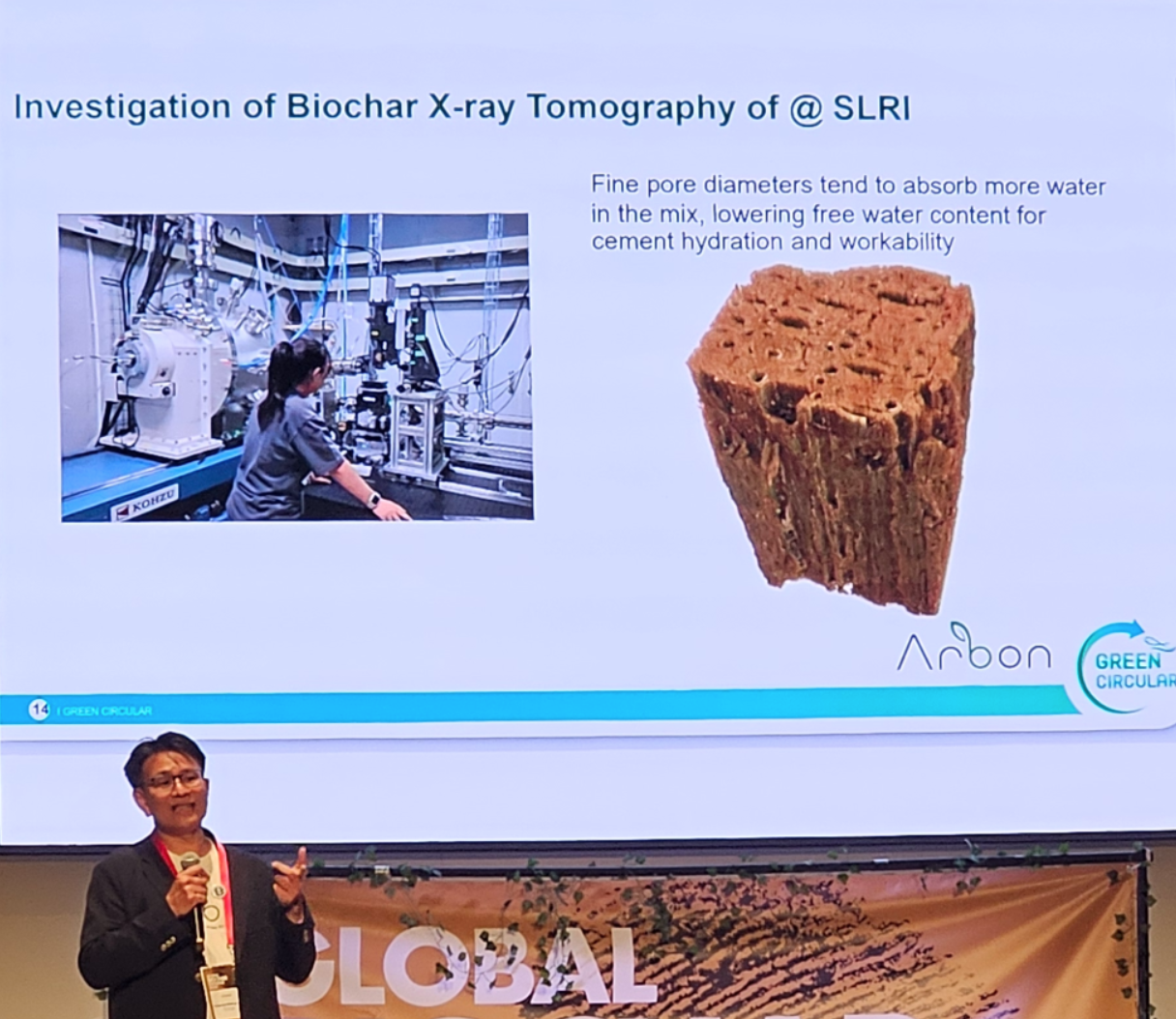
Photograph Yuventius Nicky, “SCG Presentation” 2025 Nagoya
From Agricultural Waste to Carbon-Negative Concrete
SCG, a Thai industrial giant, and its internal startup Arbon, are not just theorizing; they are executing at an impressive scale. They have developed a proprietary pyrolysis technology to process agricultural waste like rice husks and cassava rhizome into high-quality biochar.
Their plan is ambitious: to scale up to 12 plants across Thailand within three years, producing 42,000 tons of biochar annually and generating 50,000 CO₂ Removal Certificates (CORCs). The scale is truly mind-boggling for me. Many questions came to mind: How are they going to source the feedstock? How do they ensure consistent output quality?
Questions aside, I was intrigued by the dual benefits of using biochar in construction:
- It’s a Carbon Sink: The primary goal is to permanently sequester carbon within buildings and infrastructure.
- It Improves the Material: Far from being just a filler, their research shows biochar can increase the compressive strength of concrete by up to 15% and allow for a reduction in the amount of carbon-intensive cement needed.
They’ve already put this into practice, building a negative-carbon car park where they used 30 tons of biochar to permanently remove 60 tons of CO₂.
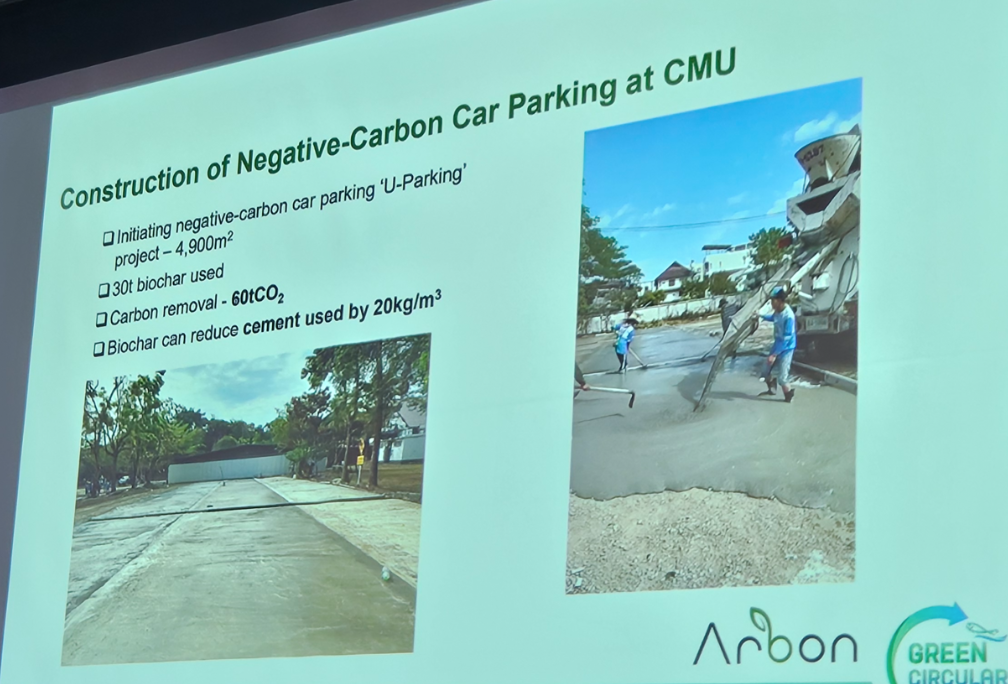
Photograph Yuventius Nicky, “SCG Presentation” 2025 Nagoya
A New Paradigm for Biochar
This is very exciting! First, my understanding expanded from soil to animal science with Joseph Stephen’s presentation. And then, it grows from agriculture to materials science and the built environment.
The work at SCG proves that biochar is not just a soil amendment; with high-tech engineering, it becomes a versatile material with the potential to decarbonize some of our hardest-to-abate sectors. It reframes the entire conversation and opens up a massive new frontier for carbon removal.
The 2025 Global Biochar Exchange left me more inspired than ever. We are truly at the beginning of a new chapter for this incredible material.
What industry do you think biochar will revolutionize next?
(Yuventius Nicky)