
“Memetri Hayuning Bumi”
This slogan is written in Javanese and translates into “Merawat dan Menjaga Keindahan dan Keselamatan Bumi” or “Caring for and Safeguarding the Beauty of our Earth”.
Bhetochar’s production site is located in East Java, strategically positioned to be close to its network of feedstock sources and the local communities that play a crucial role in high-quality biochar production for global applications. East Java is home to abundant resources, such as bamboo and agricultural residues, making it an ideal region for biochar development while supporting zero-waste processing and responsible land management.
We believe that vision and mission should be more than statements. Our production is based on our belief that involving local communities, farmers, and cultivators, biochar production will strengthen economies and promote sustainable land management practices. Integrating biochar production into local supply chains will enhance livelihoods, support regenerative agriculture, and contribute to global climate solutions. Sustainable biochar production is not just about reducing carbon footprints—it’s about empowering communities to be at the heart of the solution.
Our team
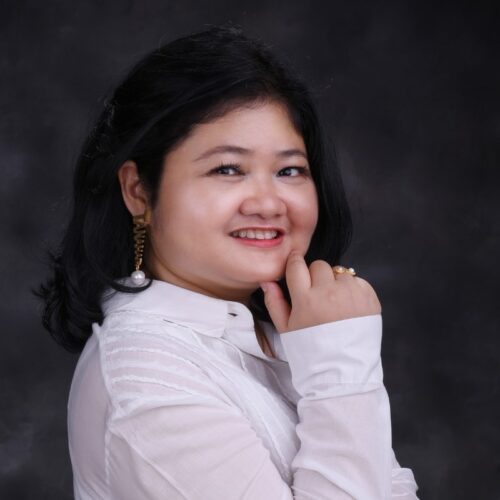
Maria has developed an extensive career in area of corporate finance/project finance for 30 years. She began her career at Arthur Andersen Indonesia in 1996 as a Corporate Finance Consultant, where she was exposed to private and public companies engaged in business and corporate finance consulting services. For almost 10 years she worked at Thiess Indonesia, overseeing Thiess Toll Road Concessions. Prior to working at Thiess she worked as a Corporate Finance Manager in an Investment Banking firm, Batavia Prosperindo Sekuritas. And prior to that she worked as an Investor Relation Manager at Tripolyta Tbk, a petrochemical company.
Currently, beside working as a CEO at Bhetochar, she also serves as a Commissioner at Clean Power Indonesia, a company focuses on Renewable Energy development.
Maria graduated with a Bachelor of Arts in Economics and Finance from the Catholic University of America, Washington, DC, USA and a Master of Business in Accounting from Queensland University of Technology, Brisbane, Australia.
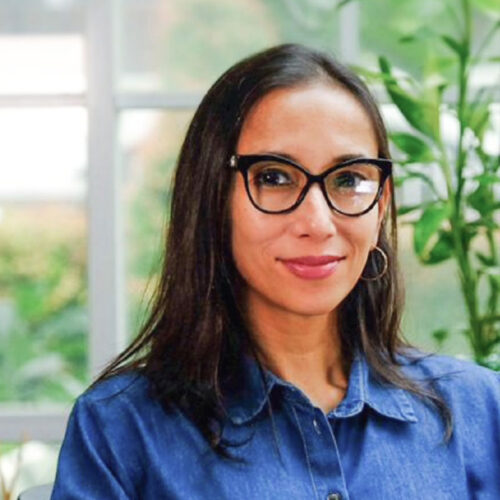
Misty Diansharira obtained her MA in Organizational Anthropology at the Vrije Universiteit Amsterdam. She handled local and international brands in her agency years at Mullen Lowe, but found most of her fulfilment in developing communication campaigns for social enterprises. She co-founded Communication for Change with Paramita Mohamad and assisted impact drivers with grant and pre-seed applications. One of her client’s renewable energy projects inspired her and her partner, Maria Wahono, to develop a biochar feedstock-to-product business model that focuses on soil restoration projects and custom biochar application services. She hopes that the next generation of healthy soil ecosystem builders will continue and improve the regenerative and restorative cycle in Indonesia.
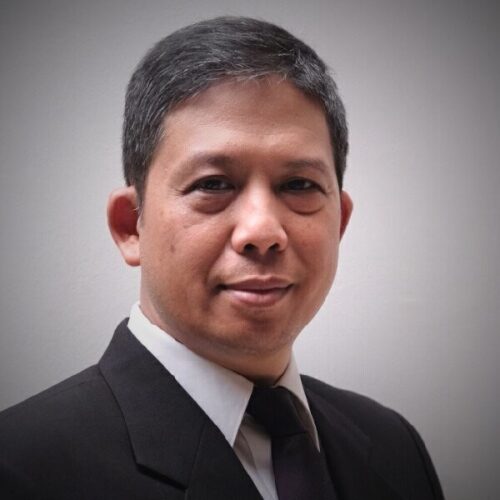
Ian brings over 35 years of engineering authority to the board, grounded in a 1990 graduation from Parahyangan University and an MSc in Engineering from Oregon State University (1993). His career in power generation includes extensive engineering experience in manufacturing and developing local utility boilers up to 15MW. This path led to senior roles at ABB, Alstom, and PT DEN , culminating in his leadership of the 700kW Mentawai PLTBm biomass project.
This deep technical foundation is designed to complement the diverse strengths of the PT Bhetochar team. By bridging high-level industrial engineering with the team’s collective insights, He helps fine-tune production to create the best fit for consumer needs. His expertise ensures that every batch of biochar is not only scientifically optimized for water retention and nutrients but is also practical and effective for the farmers who rely on it.
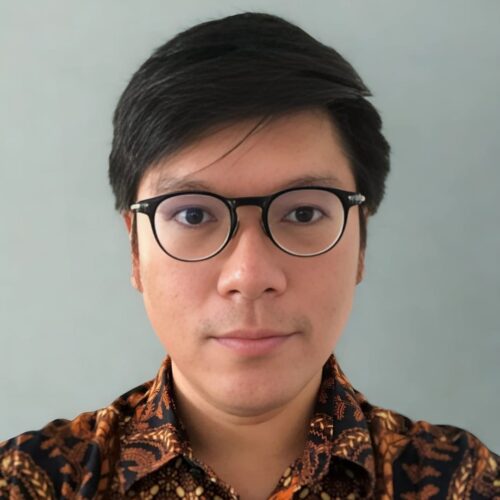
Yuventius Nicky’s work is centered on the industrial production and practical application of biochar-based technologies to address the interconnected challenges of climate change, food security, and ecosystem degradation. His work focuses on moving biochar beyond its role as a simple soil amendment and engineering it into a sophisticated platform for ecological and agricultural solutions.
His applied research investigates the engineering of biochar into a versatile platform for two key applications: enhancing agricultural biosecurity and executing complex environmental remediation.
In the agricultural domain, this involves formulating biochar as an advanced carrier for microbial inoculants. A primary focus is the development and validation of biochar products enhanced with biological control agents designed to suppress soil-borne pathogens, which pose a significant threat to vital crops in Indonesian agriculture.
In environmental remediation, his work explores the synergy between biological and botanical methods (bio-phyto remediation). A key project is the evaluation of bamboo biochar amendments combined with the hyper-tolerant local plant species to reduce the bioavailability of heavy metals and improve the substrate for ecological recovery. This foundational research is intended to create a pathway for later enhancing these systems with specialized microbial consortia, paving the way for more comprehensive, multi-faceted solutions for contaminated landscapes.
Through his work at Bhetochar, the core objective is to translate these research findings into robust, scalable products. The goal is to develop solutions that create a positive feedback loop between agriculture and the environment, providing farmers with tools that protect crop yields while simultaneously building the soil health and resilience needed to withstand long-term climate stressors. Ultimately, his work seeks to create synergistic systems where food security and ecosystem restoration are integrated and mutually reinforcing outcomes.
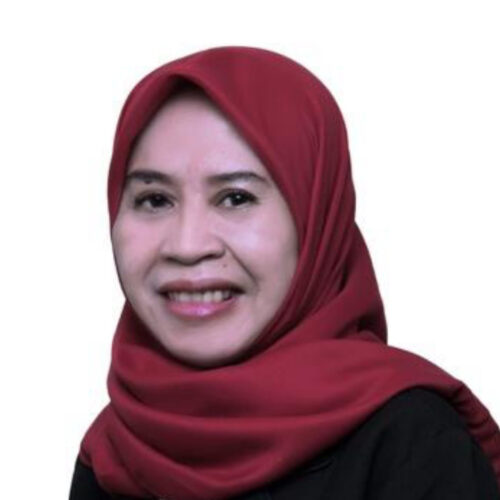
Dr. Ir. Etty Pratiwi, M.Si. earned her Ph.D. in Microbiology from IPB University and has spent over three decades researching soil microbiology and microbial technology for sustainable agriculture. As a senior researcher at the National Research and Innovation Agency (BRIN), she has developed several patented biofertilizers and biostimulants that have been applied to improve soil health and crop productivity across Indonesia. Her work reflects a lifelong commitment to innovation and collaboration, strengthened through international research and training experiences in Japan, Korea, the UK, and beyond.