
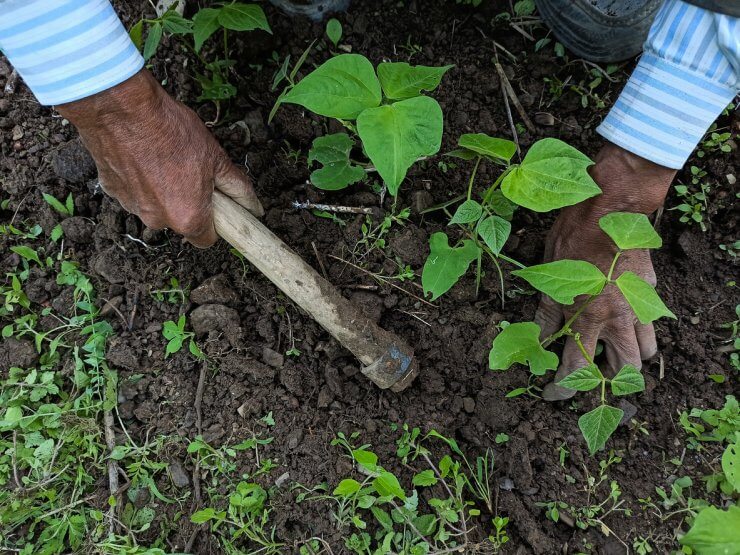
In the search for more sustainable and resilient agricultural systems, conservation tillage and biochar application have emerged as two leading strategies. Conservation tillage, particularly no-tillage, aims to protect soil structure and health by minimizing mechanical disturbance. Biochar, a stable form of carbon, is prized for its ability to amend soil and sequester carbon. While each practice offers distinct benefits, recent research has begun to illuminate their powerful synergy, revealing how their combined use can address the shortcomings of each and lead to enhanced outcomes in yield, soil health, and crop quality.
This article reviews the findings from several recent studies to build a clearer understanding of this promising partnership.
Compensating for the “Yield Drag” of No-Tillage
One of the primary concerns for farmers transitioning to no-tillage is the risk of an initial decrease in yield, often called “yield drag.” This can make the practice economically challenging, despite its long-term soil benefits. Research now suggests that biochar can serve as a powerful tool to overcome this hurdle.
A 2024 study on ratoon rice by Du et al. provides a clear example. The researchers found that, on its own, a no-tillage system resulted in a 15% lower rice yield compared to conventional rotary tillage. However, when biochar was applied, it significantly increased the rice yield under no-tillage conditions by 20%, effectively compensating for the loss. Similarly, research on Nigella sativa by Kiani et al. found that biochar application enhanced grain yield across all tillage systems, including minimum and no-tillage, under both irrigated and dryland conditions.
Building a Foundation: Soil Carbon and Emissions
The combination of no-tillage and biochar appears to be particularly effective for building long-term soil health. An 11-year field experiment by Ding et al. demonstrated that biochar application under conservation tillage significantly increased the native soil organic carbon (SOC) content. More importantly, it promoted the transfer of carbon from labile (less stable) pools to the recalcitrant (more stable) pool, suggesting a more permanent carbon sequestration benefit.
The impact on soil CO₂ emissions is more complex. A study by Acosta et al. on rotational cropping found that, in general, no-tillage plots emitted less CO₂ compared to conventional tillage plots. However, the direct effect of biochar on emissions was not straightforward, with some biochar-amended plots showing periods of higher emissions. This highlights that while the combination is beneficial for storing carbon, its influence on real-time soil respiration can be variable and requires further study.
Beyond Quantity: Enhancing Crop Quality
The benefits of this partnership extend beyond yield and into the quality of the final product. In the ratoon rice study, Du et al. found that biochar application not only boosted yield but also increased the protein content of the rice while reducing undesirable chalkiness.
Likewise, the study on Nigella sativa by Kiani et al. showed significant improvements in grain oil quality. The combination of minimum tillage and biochar improved the overall oil yield by 23-29% and also positively influenced the fatty acid profile, significantly increasing the concentration of beneficial linoleic acid.
An Emerging Synergy for Modern Agriculture
A review of these studies indicates that the combination of biochar and no-tillage is more than just an application of two separate good ideas—it is a synergistic partnership. Biochar shows clear potential to mitigate one of the main barriers to no-tillage adoption while the two practices work together to build stable soil organic carbon over the long term and improve the quality of the final harvest.
Though complexities remain, particularly around the dynamic effects on soil emissions, the research points toward a powerful strategy for developing more productive and resilient agricultural systems that are both environmentally and economically sustainable.